1+(514) 984-3268 • 2 Emplacements & Service Virtuel

Why Muscle is Your Primary Brain Hack
Your Brain’s Primary Bodyguard isn't a Pill...
It's Your Quads!
Having spent my early years as a trainer, I’ll admit I carry a certain bias toward the barbell. However, that perspective evolved from a simple pursuit of strength into a deep obsession in understanding the "Muscle-Brain Axis"—a journey that began long before I realized how connected my physical and mental states truly were.
When I first started lifting at 15, I was 6'0" and 150 lbs, motivated entirely by aesthetics rather than performance. It wasn’t until age 30, when a sudden and grueling struggle with anxiety took hold, that my focus shifted and noticing that the muscles I had been building was the key to stabilizing my mind.
The Biological Oil Filter
For most of the 20th century, muscle was seen as purely a mechanical/locomotor tool, to move our skeleton and for aesthetic purposes. Back then, we assumed muscle was just for athletes, jocks, and—let's be honest—the occasional 'douchebag’.
But that all changed with a first landmark study that came out in 2014, published in the journal Nature. It looked into how muscle was kind of a net, or filter of an inflammatory signal called kyurinine, and prevented it from crossing the blood-brain barrier, (exactly what you think it is). More simply put, think of your muscles as the body’s primary oil filter—stripping kynurenine from the blood before it can pollute your brain. This article showed that muscle mass and muscle quality improved stress resilience and significantly reduced stress-induced depression.
That was the catalyst! Since then, there have been research and discoveries into how muscles impact executive functioning, studying and information retention, attention and concentration improvement, memory amelioration and more. In the past decade, muscle has become an organ. An essential one at that!
In this blog article, we are diving deep into the science of how the muscle and brain work together or something called the muscle and brain axis, and how important it is for the busy mom, the entrepreneur or CEO that has to juggle a very busy and chaotic experience here on earth!
--------------------------------------------------------------------------------
Here are some great quotes from the research to emphasize how important and life-changing this can be.
-“Resistance training makes you smarter!” - Aging Research Reviews (2023) Meta Analysis
-“Don't waste the 'Golden Hour' after a hard training session on mindless scrolling. Your brain is never more primed to learn, adapt, and rewrite its own code than in the sixty minutes following physical exertion." - William Wallace PhD, Biology of Sport
-“Studies on Acute Exercise-Induced Arousal show that moderate-to-high intensity exercise improves 'Inhibitory Control" (the ability to ignore distractions).” -Journal of Psychophysiology
Installing the "Doors" to Energy
So earlier we spoke about kyurinine inflammatory molecule that increases depression and anxiety in the brain, via neuro (brain) inflammation. But that isn’t all muscle does. Another super important aspect is the use of glucose, and sugar. Muscle is also your primary reserve for storing glycogen (stored sugar). In a healthy body, about 80% of post-meal glucose goes straight into the muscle. Inside your muscle cells are "doors" called GLUT4 transporters. Resistance training increases these doors, leading to better blood sugar control, lower insulin needs, and stable energy.
Resistance training literally installs more 'doors' (GLUT4) in your muscles, giving blood sugar a place to go before it causes damage.
Exercise increases these doors, which means:
Precision blood sugar management
Less insulin needed
More stable energy
When these fibres shrink, your brain loses its metabolic baseline!
We now know—or at least should know—that Alzheimer’s disease has been strongly linked to what researchers call “type 3 diabetes,” a form of insulin resistance that occurs in the brain. You should! On top of that, scientists estimate that by 2045, diabetes will affect 1.05 billion people globally. This is critical because "Type 2" diabetes increases Alzheimer’s risk by up to 59%.
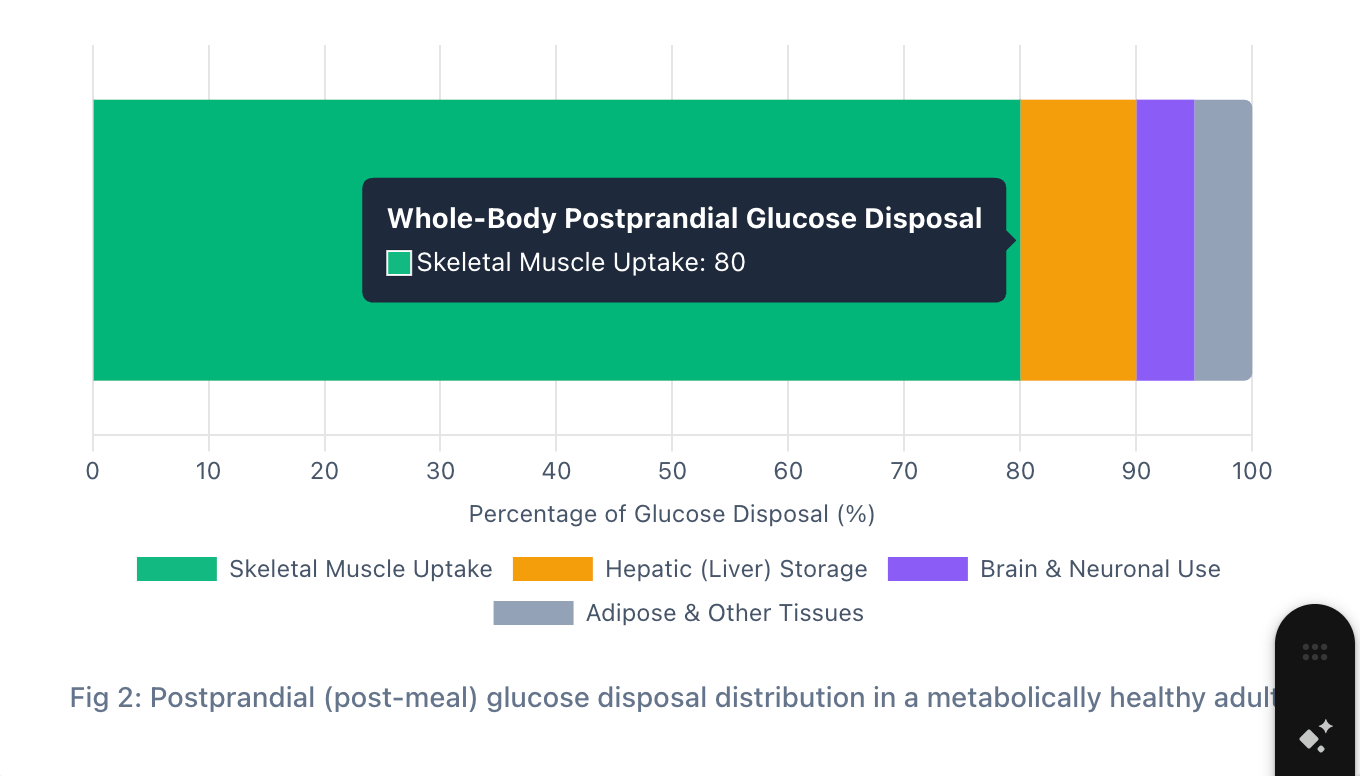
So we know our muscles are a huge player in being able to store glucose! But the best "storage unit we have is our TYPE 2 muscle fibres! These are explosive, power fibres, and as we age, we lose our explosive Type 2 fibres first. (There are many reasons for this, but less activity is the main one.) These fibres are essential for brain health and it's linked to optimal executive function. (Executive function is like the brain's “air traffic controller.” It takes care of things like impulse control, emotional intelligence, working memory, meta thinking, etc...)
Below is a graphic describing the link between the amount of Type 2 muscle fibres and executive function scores.
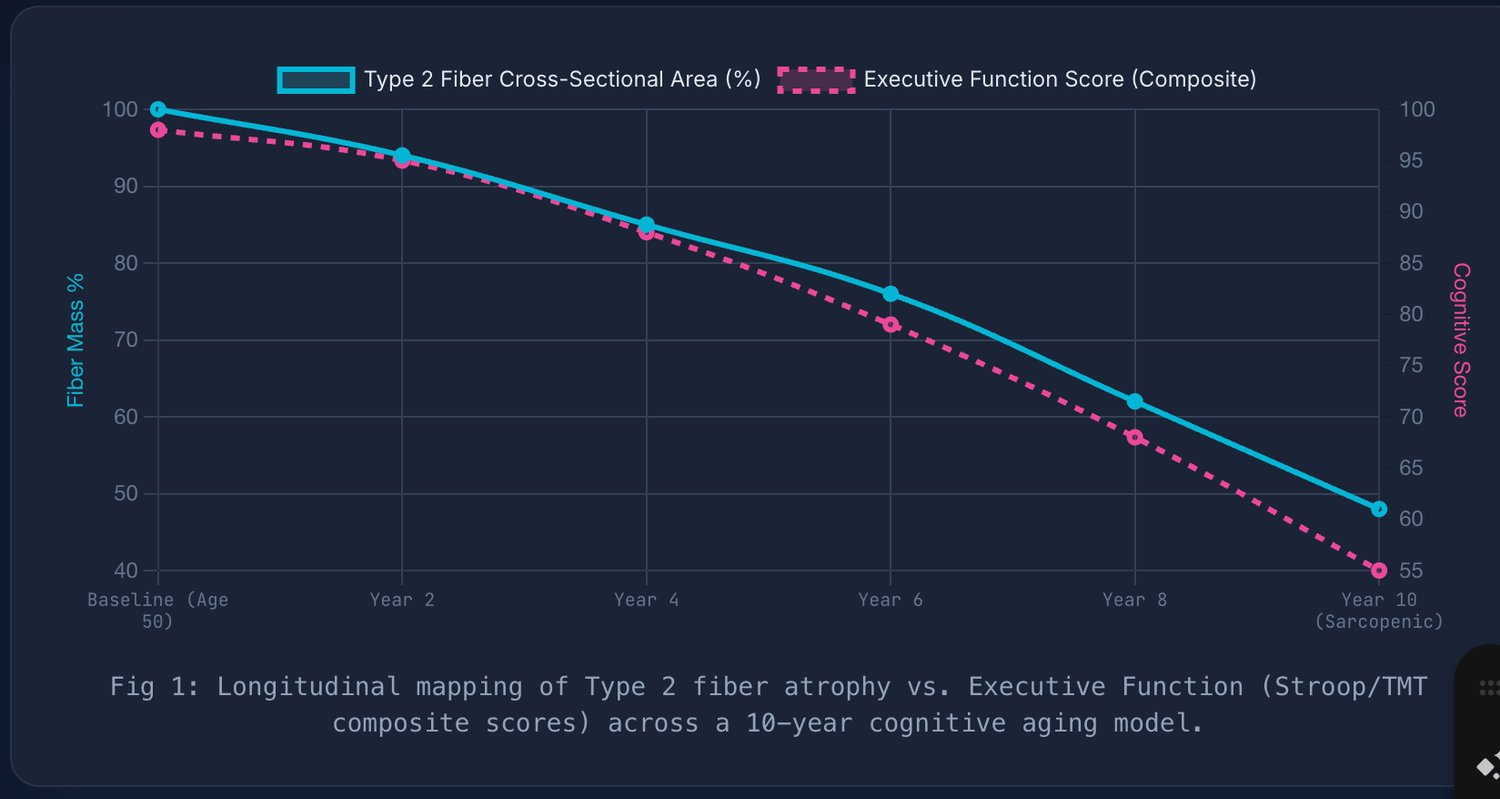
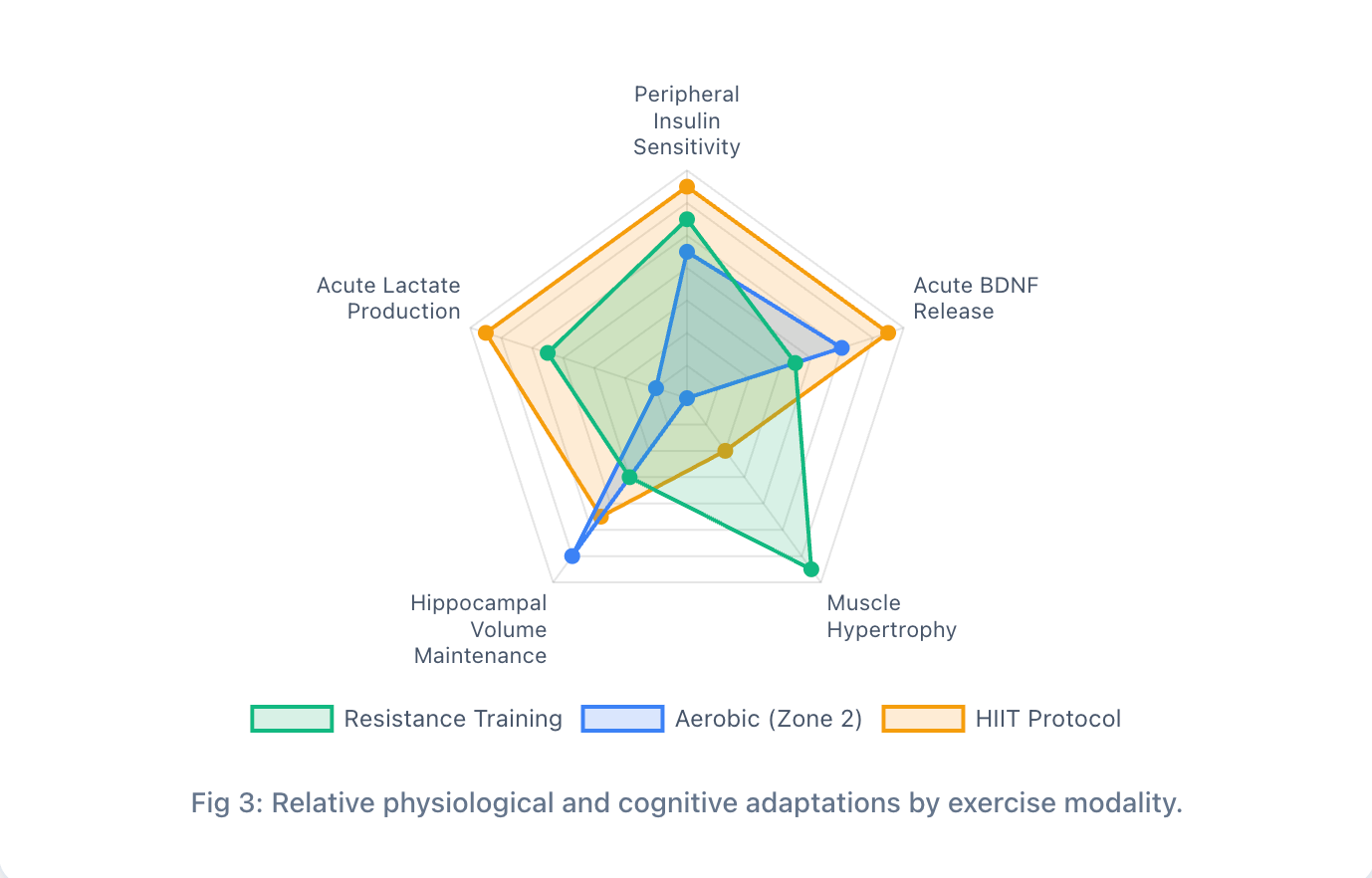
One of the best ways to combat this is keeping your type 2 muscle fibers strong and hypertrophied through resistance training or HIIT. But all forms of exercise benefit the brain in different ways. More about this BELOW! 👇
The Endocrine Power of Bone and Muscle
Muscles don’t just move your body—they release messenger proteins (myokines) when they contract. These messengers communicate with other organs, including your brain.
Exercise strengthens the brain via myokines
Irisin: released during aerobic or strength training, helps the brain grow new neurons, improve memory, and increase learning capacity.
Cathepsin B: another myokine that improves memory and learning.
Exercise-induced IL-6 (not the inflammatory kind) promotes energy production and healthy mitochondria in both muscles and the brain.
So basically when you think of it, muscle health = brain health. When you lift at 70% of your maximum effort, your bones join the conversation by releasing osteocalcin. This hormone travels to the brain to sharpen focus and calm the nervous system under pressure.
Strong, active muscles and bones release these beneficial proteins, which:
support neuroplasticity (the brain’s ability to adapt)
improve cognitive flexibility and memory
protect the brain from inflammation
Your Training and Muscle Blueprint
If you want to protect your brain, you have to treat your training like a strategic investment. We aren't just "working out"; we are installing a biological defense system. Here is the blueprint for a week designed to optimize both your body and your brain’s ability to plan, focus, make decisions, and control impulses:
1. The Heavy Foundations (40–60% of your week)
The Goal: Build "Cognitive Armor" and protect your metabolic baseline.
The Protocol: Focus on 2 to 4 sessions of heavy, technical lifting (think squats, deadlifts, or presses). We aim for loads at 70% of your maximum effort or higher.
2. The Steady State: Zone 2 Cardio (20–30% of your week)
The Goal: Infrastructure maintenance and cellular energy.
The Protocol: 1 or 2 sessions of 60-minute, steady-paced movement (brisk walking, cycling, or jogging) where you can still hold a conversation.
Why it works: This is about mitochondrial health. Think of this as expanding your internal fuel tank. It improves blood flow, allowing your brain to "flush" out toxins and stay fueled during back-to-back board meetings.
3. The Finishers: Strategic HIIT (2x per week, paired with the strength or with ZONE 2)
The Goal: Rapid glucose clearance and mental agility.
The Protocol: 20 minutes of high-intensity bursts. I recommend "bolting" this onto the end of your strength sessions.
Why it works: High-Intensity Interval Training (HIIT) is your "emergency drain." It rapidly clears out stress hormones and boosts Irisin, a molecule that tells your brain to grow new connections. It’s the fastest way to sharpen your processing speed.
Conclusion
My focus on muscle health isn't just a fitness trend; it is the "Master Integration" for the future of medicine. While the world is obsessed with the "tip of the iceberg"—body fat—high-level experts are diving deeper into muscle as the primary driver of brain longevity and metabolic sovereignty.
Let’s stop discussing 'reps' and start discussing 'infrastructure:
If you aren't investing in the muscle that protects your brain, what exactly will the rest of your life be built on?
Think about this as a "Control Center". It houses every memory of your children, your childhood, every high-stakes decision that builds your wealth, and the very personality that sustains your relationships.
When we say 'I'll start the gym tomorrow/next week/next year,' we aren't just missing a workout; we are forfeiting our future cognitive sovereignty.
The standard of a resilient professional is different. We don't train for the mirror; we train for Soverignty
Kind of a geek, kind of an athlete. Here are the citations:
🧠 Muscle-Brain Crosstalk & Exercise
Safdar, A., Tarnopolsky, M. A. (2018). Crosstalk between skeletal muscle and the brain during physical activity: In search of epigenetic mechanisms. PMC. Retrieved from pmc.ncbi.nlm.nih.gov
Egan, B., Zierath, J. R. (2013). Muscle memory of exercise optimizes mitochondrial metabolism to support skeletal muscle growth. American Journal of Physiology-Cell Physiology. journals.physiology.org
Pedersen, B. K., Febbraio, M. A. (2012). Can myokines serve as supporters of muscle–brain connectivity in obesity and type 2 diabetes? Potential of exercise and nutrition interventions. PMC. pmc.ncbi.nlm.nih.gov
Fiuza-Luces, C., et al. (2018). Muscle–brain axis: An integrative response to enhance mental health through exercise and nutrition. Frontiers in Physiology. frontiersin.org
Krause, M., et al. (2020). Muscle–brain crosstalk mediated by exercise-induced myokines – insights from experimental studies. Frontiers in Physiology. frontiersin.org
Trovato, F. M., et al. (2020). Unlocking the potential of exercise: Harnessing myokines to delay musculoskeletal aging and improve cognitive health. Frontiers in Physiology. frontiersin.org
🧬 Glucose Metabolism, Insulin & Brain Health
Simpson, I. A., et al. (2007). Glucose transporters in brain in health and disease. PMC. pmc.ncbi.nlm.nih.gov
Jørgensen, S. B., et al. (2017). A comprehensive view of muscle glucose uptake: Regulation by insulin, contractile activity and exercise. ResearchGate. researchgate.net
Cartee, G. D., et al. (2016). Exercise, GLUT4, and skeletal muscle glucose uptake. PubMed. pubmed.ncbi.nlm.nih.gov
Chen, L., et al. (2019). Glucose transporters in adipose tissue, liver, and skeletal muscle in metabolic health and disease. PMC. pmc.ncbi.nlm.nih.gov
DeFronzo, R. A., Tripathy, D. (2009). Role of skeletal muscle in insulin resistance and glucose uptake. PMC. pmc.ncbi.nlm.nih.gov
Simpson, I. A., et al. (2020). Glucose transporter 3 in neuronal glucose metabolism: Health and diseases. ResearchGate. researchgate.net
Wright, E. M., et al. (2020). Glucose transporter 1 is essential to maintain brain endothelial cell homeostasis under hyperglycemia condition. American Physiological Society Journal. journals.physiology.org
🧩 Type 3 Diabetes & Alzheimer’s Connection
de la Monte, S. M. (2014). Alzheimer's disease as type 3 diabetes: Understanding the link and implications. PMC. pmc.ncbi.nlm.nih.gov
Anand, R., et al. (2017). A systematic review on type 3 diabetes: Bridging the gap. PMC. pmc.ncbi.nlm.nih.gov
MindCrowd. (2020). Diabetes and Alzheimer's dementia: Is there a connection? mindcrowd.org
Talbot, K., et al. (2012). Brain insulin resistance: Focus on insulin receptor-mitochondria interactions. PMC. pmc.ncbi.nlm.nih.gov
Arnold, S. E., et al. (2018). The brain as an insulin-sensitive metabolic organ. PMC. pmc.ncbi.nlm.nih.gov
Kandimalla, R., et al. (2017). Type 3 diabetes: Linking insulin resistance to cognitive decline. MDPI. mdpi.com
de la Monte, S. M., Wands, J. R. (2008). Is Alzheimer's disease a Type 3 diabetes? A critical appraisal. ResearchGate. researchgate.net
Chatterjee, S., et al. (2021). Alzheimer's disease as type 3 diabetes: The impact of insulin resistance and the therapeutic potential of semaglutide in cognitive decline. PMC. pmc.ncbi.nlm.nih.gov
🏋️ Exercise & Cognitive Function
Smith, P. J., et al. (2010). The potential mechanisms of exercise-induced cognitive protection: A literature review. PMC. pmc.ncbi.nlm.nih.gov
Erickson, K. I., et al. (2011). Physical activity to counter age-related cognitive decline: Benefits. PMC. pmc.ncbi.nlm.nih.gov
Northey, J. M., et al. (2018). Meta-analysis of high-intensity interval training effects on cognitive function. PMC. pmc.ncbi.nlm.nih.gov
Moreno, F., et al. (2020). A comparison of the acute effects of high-intensity interval training and moderate intensity continuous training on working memory and emotional state in adolescent women with subthreshold depression. Frontiers in Physiology. frontiersin.org
Cesari, M., et al. (2015). Mild cognitive impairment and sarcopenia: Effects of resistance exercise training on neuroinflammation, cognitive performance, and structural brain changes. MDPI. mdpi.com

1+(514) 984-3268
Morin-Heights - Longueuil - Virtuel
https://www.gorendezvous.com/ryanhawkins
info@ryanhawkinsnd.com

LIENS RAPIDE
INFOLETTRE
Abonnez-vous maintenant pour obtenir des mises à jour quotidiennes.
Copyright © 2022 - Ryan Hawkins | Tous droits réservés